About 75 minutes
Sketches New and Old, Part 2. — Text and Context
Psychological Domestic Love Stories
17,137 recorded words. 7 minutes difference from this book's estimate.
View Gutenberg source #5837
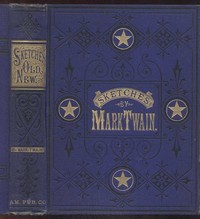
For Sketches New and Old, Part 5. — Key Ideas to Explore, the stored edition analysis reports 15,466 words, 1 hr 8 min estimated reading time, and 2 detected text sections.
The text analysis averages about 21.5 words per sentence, while the detected sections provide another way to judge how the source is divided.
Project Gutenberg metadata also associates the work with “Humorous stories, American,” connecting these edition facts with the source record’s subject description.
Explore this collection
These alternatives are selected using recorded categories and estimated reading time.
About 75 minutes
Psychological Domestic Love Stories
17,137 recorded words. 7 minutes difference from this book's estimate.
View Gutenberg source #5837About 78 minutes
Psychological Domestic Love Stories
17,838 recorded words. 10 minutes difference from this book's estimate.
View Gutenberg source #5838About 81 minutes
Psychological Domestic Love Stories
18,522 recorded words. 13 minutes difference from this book's estimate.
View Gutenberg source #5839Search stored excerpts and compare books → Choose by your preferences →
Choices use stored catalog measurements. Estimates vary with reading speed. A shared category is a catalog label, not a claim that two books have the same argument or literary quality.
Search reads excerpt text stored with this catalog and links to its associated Gutenberg record. The connection is stored in the site database; this tool does not recheck that every excerpt is word-for-word identical to that external record. Excerpt search does not cover every chapter and does not verify historical publication dates.
Catalog snapshot checked: 2026-09-25. Coverage: 94 public books, 94 available source excerpts.
Calculated from edition completeness, EPUB availability, text structure and catalogue metadata. Not a user rating.
Total of 100 points, scaled to a 2.5-5.0 range. Editions with an empty description or a missing EPUB file are not scored.
Public-domain source text
The source text is kept in the dedicated reader, separate from this catalogue record and its commentary.
In 'The Siamese Twins,' Twain adopts the pose of an intimate biographer who knows the twins 'intimately,' yet the details he supplies—such as Chang doing indoor work while Eng runs errands, or the twins fighting on opposite sides of the Civil War—are so absurd that the reader quickly recognizes the deadpan parody of sentimental biography. The sketch's structure hinges on a central joke: treating conjoined twins as ordinary brothers who happen to be physically attached, then applying mundane domestic logic to their extraordinary situation.
Twain's narrator in 'The Siamese Twins' claims to know the twins 'intimately' and to reveal 'curious details of various kinds' never before printed. Yet the details are patently ridiculous: the twins 'always go to bed at the same time; but Chang usually gets up about an hour before his brother.' The narrator never acknowledges the physical impossibility of one twin rising independently. This structural irony—a straight-faced recitation of absurdities—is the sketch's engine. Twain extends the joke by applying legal and military logic: when both twins are captured in battle, a court must decide who is the captor and who the captive, eventually declaring them both prisoners and exchanging them. The sketch's humor depends on the reader recognizing the gap between the narrator's earnest tone and the ludicrous content.
'John Chinaman in New York' begins with a sentimental tableau: a Chinese man used as a living sign outside a tea store, stared at by passersby. The narrator's initial response is pity, imagining the exile's distant homeland and lost companions. But when he approaches the man to offer comfort and financial help, the Chinaman replies in a thick Irish brogue: 'Divil a cint but four dollars a week and find meself.' The dialect shatters the narrator's romanticized vision. The sketch's structure moves from a moralizing, elevated tone to a comic deflation, revealing that the narrator's sympathy was based on a misreading of the man's identity. Twain uses this reversal to critique both the dehumanizing spectacle of the 'sign' and the narrator's own condescending pity.
'How I Edited an Agricultural Paper' follows a narrator who takes over a farm journal despite knowing nothing about agriculture. He writes with 'unflagging pleasure,' filling the paper with absurd advice—such as turningips on the top of the ground—and receives a visit from a furious farmer who calls him a 'lunatic.' The sketch's humor arises from the narrator's cheerful incompetence and his utter failure to recognize his own errors. Structurally, Twain builds the joke through escalating consequences: first a crowd gathers to stare at the editor, then a farmer arrives to berate him, and finally the regular editor returns to fire him. The narrator remains oblivious throughout, a pattern that recurs in Twain's work where the teller's self-assurance is the source of comedy.
Across these sketches, a consistent structural device emerges: a narrator or observer who misreads a situation, only to be corrected by an unexpected revelation. In 'The Siamese Twins,' the narrator's intimate knowledge is a sham; in 'John Chinaman,' the narrator's sympathy is misplaced; in 'How I Edited an Agricultural Paper,' the editor's confidence is deluded. Each sketch pivots on a moment where the reader sees the truth before the narrator does. This pattern suggests that Twain was experimenting with unreliable narration and dramatic irony as a comic technique. The settings shift from domestic to urban to editorial office, but the underlying structure—a confident voice undercut by reality—remains constant.
Readers approaching these sketches will find that Twain's humor often depends on paying close attention to who is speaking and how much they know. The narrators are not Twain himself but characters with limited perspectives, and the comedy arises from the gap between their certainty and the facts. Noticing when the narrator's tone shifts—from sentimental to matter-of-fact, or from indignant to oblivious—reveals the structural wit beneath the surface.
Reading about Twain's Siamese twins, I remembered an old railway station where two strangers shared one umbrella, their mirrored awkwardness a quiet vaudeville. That same gentle absurdity surfaced later in Sketches New and Old, Part 1. — Reading Notes, where his early jokes felt like finding a note I'd written to myself years ago—familiar, slightly embarrassing, and oddly comforting.
Use these questions to collect your thoughts before moving on.









