About 78 minutes
Sketches New and Old, Part 3. — Text and Context
Psychological Domestic Love Stories
17,838 recorded words. 3 minutes difference from this book's estimate.
View Gutenberg source #5838
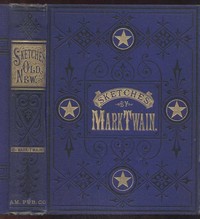
This digital edition of Sketches New and Old, Part 4. — Edition Insights is described by source-level measurements including 18,522 words, 1 hr 21 min estimated reading time, and 3 detected text sections.
The text analysis averages about 21.2 words per sentence, while the detected sections provide another way to judge how the source is divided.
Project Gutenberg metadata also associates the work with “Humorous stories, American,” connecting these edition facts with the source record’s subject description.
Explore this collection
These alternatives are selected using recorded categories and estimated reading time.
About 78 minutes
Psychological Domestic Love Stories
17,838 recorded words. 3 minutes difference from this book's estimate.
View Gutenberg source #5838About 75 minutes
Psychological Domestic Love Stories
17,137 recorded words. 6 minutes difference from this book's estimate.
View Gutenberg source #5837About 68 minutes
Psychological Domestic Love Stories
15,466 recorded words. 13 minutes difference from this book's estimate.
View Gutenberg source #5840Search stored excerpts and compare books → Choose by your preferences →
Choices use stored catalog measurements. Estimates vary with reading speed. A shared category is a catalog label, not a claim that two books have the same argument or literary quality.
Search reads excerpt text stored with this catalog and links to its associated Gutenberg record. The connection is stored in the site database; this tool does not recheck that every excerpt is word-for-word identical to that external record. Excerpt search does not cover every chapter and does not verify historical publication dates.
Catalog snapshot checked: 2026-09-25. Coverage: 94 public books, 94 available source excerpts.
Calculated from edition completeness, EPUB availability, text structure and catalogue metadata. Not a user rating.
Total of 100 points, scaled to a 2.5-5.0 range. Editions with an empty description or a missing EPUB file are not scored.
Public-domain source text
The source text is kept in the dedicated reader, separate from this catalogue record and its commentary.
Mark Twain opens this collection with a portrait of Benjamin Franklin that is anything but reverent. Franklin is described as having a 'vicious disposition' who 'prostituted his talents to the invention of maxims and aphorisms' designed to torment boys. Twain’s deadpan exaggeration—claiming Franklin was born simultaneously in two houses, both still pointed out to strangers—sets the tone for a volume where humor springs from treating the absurd with mock solemnity.
The excerpts show Twain moving from biographical parody to a grimly comic essay on insanity and crime, then to a medieval romance parody. Each piece relies on a narrator who states the outrageous as fact, leaving readers to gauge the gap between what is said and what is meant.
The opening sketch, 'The Late Benjamin Franklin,' treats the Founding Father as a malevolent figure whose maxims have ruined childhood. Twain lists aphorisms like 'A grout a day’s a penny a year' and 'Procrastination is the thief of time' as weapons used by parents to spoil simple pleasures. The narrator claims Franklin’s 'Early to bed and early to rise' maxim has left him in 'general debility, indigence, and mental aberration.'
Twain’s technique is to invert the expected moral: Franklin’s industry becomes a scheme to make other boys miserable. The humor depends on readers recognizing the real Franklin biography while enjoying the narrator’s outrage. The sketch is less about historical accuracy than about the tyranny of received wisdom.
In a later excerpt, Twain adopts the voice of a social commentator analyzing murder cases. He recounts the Durgin case—a servant who killed her mistress, set fire to the house, and carried the baby to a neighbor—noting that no insanity plea was offered, and she was hanged. Another case involves a youth who shot a young woman after a year of obsession; he too was hanged without an insanity defense.
The narrator then observes that 'insanity certainly is on the increase in the world, and crime is dying out,' and that wealthy defendants now use 'kleptomania' or 'Temporary Aberration' as excuses. The essay’s force comes from its flat, reportorial tone applied to grisly details, making the reader question whether the narrator is serious or satirizing public fascination with insanity pleas.
The collection includes 'A Medieval Romance,' a piece that lampoons chivalric conventions. Though the excerpt is brief, the title signals Twain’s interest in deflating romanticized history. Based on his other works, readers can expect anachronistic humor, exaggerated heroics, and a narrator who treats absurd plot twists with gravity.
This sketch contrasts with the Franklin piece and the crime essay, showing Twain’s range from biographical burlesque to social satire to genre parody. The medieval setting allows him to mock courtly love, honor, and adventure, much as he mocked Franklin’s maxims.
Across these excerpts, Twain’s narrators share a common trait: they present outrageous claims as sober fact. The Franklin sketch’s narrator speaks of Franklin’s 'malevolence which is without parallel in history' as if stating objective truth. The crime essay’s narrator coolly recounts murders and then generalizes about societal trends. This deadpan delivery is the engine of Twain’s humor.
Readers should attend to the gap between the narrator’s confidence and the absurdity of the content. Twain rarely signals irony explicitly; instead, he lets the accumulation of ridiculous detail do the work. The effect is that the reader becomes complicit in recognizing the joke.
These sketches reward attention to Twain’s rhetorical strategies: the mock-heroic biography, the faux-sociological essay, and the genre parody. Each piece stands alone, but together they demonstrate a consistent method of using a straight-faced narrator to expose folly. Readers will find that the humor deepens when they consider what Twain is implicitly criticizing—whether it’s uncritical reverence for historical figures, public attitudes toward crime, or literary clichés.
There’s something about Twain’s gentle mockery in these sketches—how he pokes at seriousness without ever losing affection for it—that reminded me of another quiet read. Beechcroft at Rockstone — Inside the Classic carries that same warm, unhurried feeling, like sitting with an old friend who notices the funny bits of life without needing to laugh too loud.
Use these questions to collect your thoughts before moving on.









