About 75 minutes
Sketches New and Old, Part 2. — Text and Context
Psychological Domestic Love Stories
17,137 recorded words. 3 minutes difference from this book's estimate.
View Gutenberg source #5837
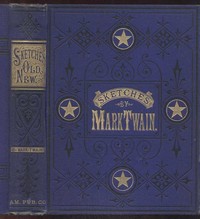
Sketches New and Old, Part 3. — Text and Context can be approached with a clearer sense of reading commitment from its source measurements: 17,838 words, 1 hr 18 min estimated reading time, and 3 detected text sections.
The text analysis averages about 23.8 words per sentence, while the detected sections provide another way to judge how the source is divided.
Project Gutenberg metadata also associates the work with “Humorous stories, American,” connecting these edition facts with the source record’s subject description.
Explore this collection
These alternatives are selected using recorded categories and estimated reading time.
About 75 minutes
Psychological Domestic Love Stories
17,137 recorded words. 3 minutes difference from this book's estimate.
View Gutenberg source #5837About 81 minutes
Psychological Domestic Love Stories
18,522 recorded words. 3 minutes difference from this book's estimate.
View Gutenberg source #5839About 68 minutes
Psychological Domestic Love Stories
15,466 recorded words. 10 minutes difference from this book's estimate.
View Gutenberg source #5840Search stored excerpts and compare books → Choose by your preferences →
Choices use stored catalog measurements. Estimates vary with reading speed. A shared category is a catalog label, not a claim that two books have the same argument or literary quality.
Search reads excerpt text stored with this catalog and links to its associated Gutenberg record. The connection is stored in the site database; this tool does not recheck that every excerpt is word-for-word identical to that external record. Excerpt search does not cover every chapter and does not verify historical publication dates.
Catalog snapshot checked: 2026-09-25. Coverage: 94 public books, 94 available source excerpts.
Calculated from edition completeness, EPUB availability, text structure and catalogue metadata. Not a user rating.
Total of 100 points, scaled to a 2.5-5.0 range. Editions with an empty description or a missing EPUB file are not scored.
Public-domain source text
The source text is kept in the dedicated reader, separate from this catalogue record and its commentary.
The third installment of Twain's Sketches New and Old opens with a mock-legal defense of a boy arrested for stoning Chinese immigrants. The narrator adopts the tone of a courtroom advocate, systematically listing the hypocrisies the boy learned from newspapers and public sentiment: that Chinese miners are taxed twice, that white thieves are merely banished while Chinese thieves are hanged, and that the police are alternately asleep or heroic. This piece sets the collection's pattern of using a straight-faced, indignant voice to expose societal double standards.
The first sketch, “Disgraceful Persecution of a Boy,” is built on a sustained ironic premise: the narrator argues that the boy's actions were a natural result of the prejudices he absorbed from society. Twain uses the structure of a legal defense—calling for “testimony for the defense”—to list grievances against California's treatment of Chinese immigrants. The repetition of “It was in this way that he found out” creates a rhythmic catalog of injustices, each clause building the case that the boy is a product of his environment. The voice is that of a reasonable, outraged citizen, but the outrage is directed at the very people who would condemn the boy. This technique forces readers to confront their own complicity in the systems being criticized.
The collection's middle section, “Some Learned Fables, for Good Old Boys and Girls,” shifts to a third-person narrative about a scientific expedition of insects and reptiles studying the extinct “Man.” The tone becomes mock-academic, with characters like Professor Woodlouse and Professor Snail delivering pompous speeches full of invented jargon: “perlustration and perscontation of this isoperimetrical protuberance.” The narrator here is detached and amused, contrasting with the earlier indignant voice. The fable satirizes the tendency of scientists to overinterpret fragmentary evidence—such as a flood marker misread as a divine conflagration—and to build entire disciplines on shaky translations. Twain's control of pace is evident: the legal sketch moves in rapid, accumulating clauses, while the fable slows to a deliberate, pedantic crawl, mimicking the scientists' own ponderousness.
Twain varies the rhythm of his prose across the three sketches. In the opening piece, short, punchy sentences like “What a commentary is this upon human justice!” alternate with longer, list-like constructions that pile up examples of hypocrisy. The fable, by contrast, uses longer, convoluted sentences filled with parenthetical asides and mock-scholarly qualifications. The final sketch, “A Fine Old Man,” returns to a more conversational pace, with direct address and anecdotal structure. This deliberate modulation of pace keeps the reader engaged and underscores the tonal shifts between righteous anger, intellectual satire, and plainspoken humor. The collection's structure—moving from a specific injustice to a general satire of knowledge-making to a character sketch—demonstrates Twain's range as a stylist.
Readers will find that the effectiveness of these sketches depends on attention to Twain's narrative stance. The voice is never neutral: it is either earnestly ironic, mock-pedantic, or dryly observational. Noticing when the narrator seems to agree with the surface argument—and when he is undercutting it—is key to grasping the satire. The three pieces reward close reading of their rhetorical strategies rather than plot.
I was rereading Twain’s third sketches last night, the way he quietly laughs at the nonsense we call progress. It stirred a slower memory, of sitting with that other book, where a young man’s stumble through life feels just as gently absurd. Strange, how one voice can echo another across years. The Ne'er-Do-Well — Reading Companion came back to me without effort, like an old photograph slipping from a page.
Capture what you thought, learned, and would like to remember.









