About 78 minutes
Sketches New and Old, Part 3. — Text and Context
Psychological Domestic Love Stories
17,838 recorded words. 3 minutes difference from this book's estimate.
View Gutenberg source #5838
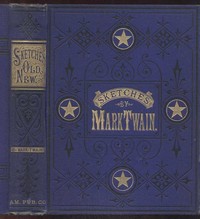
Sketches New and Old, Part 2. — Text and Context can be approached with a clearer sense of reading commitment from its source measurements: 17,137 words, 1 hr 15 min estimated reading time, and 3 detected text sections.
The text analysis averages about 20.4 words per sentence, while the detected sections provide another way to judge how the source is divided.
Project Gutenberg metadata also associates the work with “Humorous stories, American,” connecting these edition facts with the source record’s subject description.
Explore this collection
These alternatives are selected using recorded categories and estimated reading time.
About 78 minutes
Psychological Domestic Love Stories
17,838 recorded words. 3 minutes difference from this book's estimate.
View Gutenberg source #5838About 81 minutes
Psychological Domestic Love Stories
18,522 recorded words. 6 minutes difference from this book's estimate.
View Gutenberg source #5839About 68 minutes
Psychological Domestic Love Stories
15,466 recorded words. 7 minutes difference from this book's estimate.
View Gutenberg source #5840Search stored excerpts and compare books → Choose by your preferences →
Choices use stored catalog measurements. Estimates vary with reading speed. A shared category is a catalog label, not a claim that two books have the same argument or literary quality.
Search reads excerpt text stored with this catalog and links to its associated Gutenberg record. The connection is stored in the site database; this tool does not recheck that every excerpt is word-for-word identical to that external record. Excerpt search does not cover every chapter and does not verify historical publication dates.
Catalog snapshot checked: 2026-09-25. Coverage: 94 public books, 94 available source excerpts.
Calculated from edition completeness, EPUB availability, text structure and catalogue metadata. Not a user rating.
Total of 100 points, scaled to a 2.5-5.0 range. Editions with an empty description or a missing EPUB file are not scored.
Public-domain source text
The source text is kept in the dedicated reader, separate from this catalogue record and its commentary.
The catalog classifies Sketches New and Old, Part 2 under “Psychological, Domestic & Love Stories,” yet the excerpts depict no domestic interiors or romantic entanglements. Instead, the sketches inhabit newspaper offices, church pews, and public streets—arenas of masculine sociability and civic satire. The opening piece, “Answers to Correspondents,” is a blistering reply to a “Moral Statistician” who tabulates the harms of smoking, drinking, and hoop skirts. Twain’s speaker defends these “vicious enjoyments” as sources of solid comfort, and he attacks the statistician’s stinginess and hypocrisy. The humor derives not from domestic drama but from the clash between moral arithmetic and lived pleasure.
The sketch “The Office Bore” offers a sustained, almost clinical anatomy of a nuisance. Twain enumerates the bore’s physical habits: he “lolls,” “sprawls,” yawns, stretches, and scratches “with a tranquil, mangy enjoyment.” The bore never assumes an upright posture or a “fraudful affectation of dignity.” His presence is a slow drain on editorial energy, and Twain catalogs the editor’s escalating despair—from sinking spirits to fantasies of the bore’s funeral, then to imagining him in the Inquisition, and finally to wishing him “millions and millions and millions of miles in Tophet.” The passage is remarkable for its accumulation of hyperbole and its refusal to resolve into a punchline. It treats the bore not as a comic foil but as an affliction that “transcends any other that men suffer.”
In “Answers to Correspondents,” Twain’s speaker directly addresses a “Moral Statistician” who calculates the costs of smoking, coffee, billiards, and wine. The reply rejects the premise that such pleasures can be measured in dollars or lost years. The speaker argues that statisticians “never see more than one side of the question” and ignore the “appalling aggregate of happiness lost” by abstainers. He then turns the tables: those without “petty vices” are stingy, never laugh, and cheat on taxes. The sketch is structured as a single, escalating tirade, with no narrative frame. It reads as a performed rant, blending logical counterargument with personal insult. The target is not a specific vice but the mindset that reduces life to a ledger.
The excerpt from “Johnny Greer” shifts register abruptly. A Sunday-school superintendent recounts a sermon about a “brave, noble, daring little Johnny Greer” who rescued a drowned body. The language is earnest and clichéd: “the church was densely crowded,” “all seemed impressed by the poor black boy’s fate.” The fragment breaks off before the story concludes, but the tone is unmistakably sentimental—a stark contrast to the sardonic voice of the earlier sketches. This juxtaposition raises questions about the collection’s range. Does Twain undercut the sentiment, or does he offer it straight? The excerpt provides no answer, but the shift itself is noteworthy. It suggests that the volume moves between modes of humor and pathos, perhaps testing the reader’s tolerance for both.
Readers approaching Sketches New and Old, Part 2 should set aside expectations of domestic fiction. The collection is best read as a series of public performances: letters to the editor, character sketches, and moral parables. Twain’s voice shifts from aggressive to sentimental, and the excerpts give no single key to the whole. Pay attention to the settings—newspaper offices, church services—and to the recurring tension between statistical reasoning and embodied experience. The humor often depends on recognizing the gap between official morality and actual behavior.
There is a strange comfort in how Twain’s sketches turn away from the parlor and toward the smoky bustle of men at work. It reminded me of a quieter volume, one that keeps its gaze fixed on the lamplit hearth instead. The contrast feels less like opposition, more like a slow exhale. I keep thinking of that other book, Home Lights and Shadows — Story, Setting & Ideas, as if they were two rooms in the same house, neither one fully known without the other.
Create a short personal record of your experience with this book.









