About 98 minutes
Madame de Treymes — Background and Themes
Psychological Domestic Love Stories
22,435 recorded words. 1 minutes difference from this book's estimate.
View Gutenberg source #4518
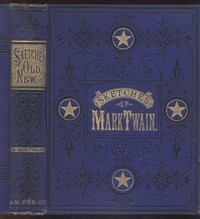
Sketches New and Old, Part 1. — Reading Notes can be approached with a clearer sense of reading commitment from its source measurements: 22,243 words, 1 hr 37 min estimated reading time, and 3 detected text sections.
The text analysis averages about 25.2 words per sentence, while the detected sections provide another way to judge how the source is divided.
Project Gutenberg metadata also associates the work with “Humorous stories, American,” connecting these edition facts with the source record’s subject description.
Explore this collection
These alternatives are selected using recorded categories and estimated reading time.
About 98 minutes
Psychological Domestic Love Stories
22,435 recorded words. 1 minutes difference from this book's estimate.
View Gutenberg source #4518About 111 minutes
Psychological Domestic Love Stories
25,519 recorded words. 14 minutes difference from this book's estimate.
View Gutenberg source #5200About 81 minutes
Psychological Domestic Love Stories
18,522 recorded words. 16 minutes difference from this book's estimate.
View Gutenberg source #5839Search stored excerpts and compare books → Choose by your preferences →
Choices use stored catalog measurements. Estimates vary with reading speed. A shared category is a catalog label, not a claim that two books have the same argument or literary quality.
Search reads excerpt text stored with this catalog and links to its associated Gutenberg record. The connection is stored in the site database; this tool does not recheck that every excerpt is word-for-word identical to that external record. Excerpt search does not cover every chapter and does not verify historical publication dates.
Catalog snapshot checked: 2026-09-25. Coverage: 94 public books, 94 available source excerpts.
Calculated from edition completeness, EPUB availability, text structure and catalogue metadata. Not a user rating.
Total of 100 points, scaled to a 2.5-5.0 range. Editions with an empty description or a missing EPUB file are not scored.
Public-domain source text
The source text is kept in the dedicated reader, separate from this catalogue record and its commentary.
The narrator's watch, which 'had run eighteen months without losing or gaining,' becomes a character in its own right, subject to the ministrations of a series of watchmakers who each impose their own theories on its mechanism. The watch's rebellion—racing ahead thirteen days, then lagging into 'week before last'—is a comic inversion of the domestic order that a timepiece is meant to uphold. This opening sketch establishes a pattern: ordinary objects and routines become occasions for elaborate, escalating absurdity.
The excerpts also reveal a fondness for professional settings as stages for mayhem. In 'Journalism in Tennessee,' the associate editor's first day includes gunfire, a hand grenade, and the loss of a finger and teeth, all treated with deadpan understatement. The catalog subject 'Humorous stories, American' is clearly apt, but the humor derives less from punchlines than from the narrator's persistent, baffled dignity in the face of chaos.
The watch narrative is not merely a joke about faulty repairs; it traces a precise emotional arc. The narrator initially regards his watch as 'infallible' and 'imperishable,' a source of stability. Its running down triggers 'bodings and superstitions,' as if the watch's failure portends larger calamity. This investment in a mechanical object's reliability reflects a broader cultural faith in order and precision—a faith that Twain systematically dismantles.
Each watchmaker's intervention worsens the problem, and the narrator's helplessness grows. The watch's erratic behavior disrupts his life: he misses trains, fails appointments, and 'got to missing my dinner.' The climax is a temporal dislocation so severe that he feels kinship with a mummy, 'lingering along in week before last.' The humor is built on the gap between the narrator's earnest desire for order and the universe's refusal to cooperate. This pattern—a small malfunction spiraling into existential absurdity—recurs in other sketches, suggesting that for Twain, domestic life is a minefield of thwarted expectations.
'Journalism in Tennessee' presents a newsroom where gunfire, grenades, and physical assault are part of the daily workflow. The chief editor, dressed in an obsolete 1848 costume, responds to a rival editor's bullet by snatching a navy revolver and firing back, then calmly resumes editing. The narrator, caught in the crossfire, loses a finger and teeth, yet the chief editor's only comment is about the ruined stove. The violence is rendered with matter-of-fact detail: 'Merely a finger shot off.'
This sketch satirizes the rough-and-tumble world of frontier journalism, where editorial disputes were settled with weapons rather than words. The narrator's naive attempt to write a conventional 'Spirit of the Tennessee Press' column is met with fury—the chief editor 'plow through another man's verbs and adjectives so relentlessly.' The humor lies in the contrast between the narrator's genteel expectations and the brutal reality. The catalog subject 'United States -- Social life and customs' is reflected here, but the excerpt shows a specific, exaggerated version of 19th-century American journalism that Twain uses to critique the profession's pretensions to civility.
Across the excerpts, the first-person narrator is consistently earnest, reasonable, and bewildered—a perfect foil for the absurd events he describes. In 'My Watch,' he protests the jeweler's interference with 'anguish' and 'implored him to let the watch alone,' yet he is powerless. In 'Journalism in Tennessee,' he accepts the loss of body parts with a kind of stunned politeness. This narrative voice never acknowledges the humor of his situation, which is what makes it funny.
The structure of each sketch follows a similar pattern: a normal situation (owning a watch, starting a job) is introduced, then disrupted by a series of escalating complications. The narrator's attempts to restore order only deepen the chaos. Twain's prose is precise and understated, even when describing mayhem. The watch's pulse 'went up to a hundred and fifty in the shade' is a medical metaphor applied to a machine. The editor's costume is dated 'about 1848,' a small detail that signals his anachronistic, theatrical violence. These recurring techniques—deadpan voice, escalating absurdity, and precise, incongruous detail—are the hallmarks of Twain's early comic style.
The excerpts from Sketches New and Old, Part 1 show Twain developing his signature blend of domestic satire and professional farce. Readers will find that the humor depends on the narrator's persistent, unacknowledged dignity in the face of chaos. The catalog subjects of humorous stories and American social customs are well supported, but the sketches also reveal a writer experimenting with voice and structure. Pay attention to how Twain uses precise, concrete details—a watch's pulse, an editor's collar—to ground his most extravagant flights of fancy.
The afternoon rain kept me inside with Twain’s early sketches, chuckling at his ridiculous watch and the chaotic newspaper office. That playful irreverence lingered warmly. Later, I found myself curious about the era behind the humor, and drifted into Sketches New and Old, Part 6. — Background and Themes. Reading it felt less like studying and more like sitting with an old friend, understanding the quiet context of those loud, lovely absurdities.
A brief reflection can help important ideas stay with you longer.









