About 68 minutes
Sketches New and Old, Part 5. — Key Ideas to Explore
Psychological Domestic Love Stories
15,466 recorded words. 17 minutes difference from this book's estimate.
View Gutenberg source #5840
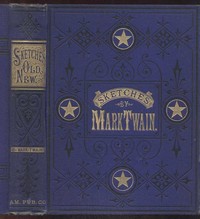
Before opening Sketches New and Old, Part 6. — Background and Themes, the edition data offers a quick orientation: 11,666 words, 51 min estimated reading time, and 2 detected text sections.
The text analysis averages about 21.4 words per sentence, while the detected sections provide another way to judge how the source is divided.
Project Gutenberg metadata also associates the work with “Humorous stories, American,” connecting these edition facts with the source record’s subject description.
Explore this collection
These alternatives are selected using recorded categories and estimated reading time.
About 68 minutes
Psychological Domestic Love Stories
15,466 recorded words. 17 minutes difference from this book's estimate.
View Gutenberg source #5840About 75 minutes
Psychological Domestic Love Stories
17,137 recorded words. 24 minutes difference from this book's estimate.
View Gutenberg source #5837About 78 minutes
Psychological Domestic Love Stories
17,838 recorded words. 27 minutes difference from this book's estimate.
View Gutenberg source #5838Search stored excerpts and compare books → Choose by your preferences →
Choices use stored catalog measurements. Estimates vary with reading speed. A shared category is a catalog label, not a claim that two books have the same argument or literary quality.
Search reads excerpt text stored with this catalog and links to its associated Gutenberg record. The connection is stored in the site database; this tool does not recheck that every excerpt is word-for-word identical to that external record. Excerpt search does not cover every chapter and does not verify historical publication dates.
Catalog snapshot checked: 2026-09-25. Coverage: 94 public books, 94 available source excerpts.
Calculated from edition completeness, EPUB availability, text structure and catalogue metadata. Not a user rating.
Total of 100 points, scaled to a 2.5-5.0 range. Editions with an empty description or a missing EPUB file are not scored.
Public-domain source text
The source text is kept in the dedicated reader, separate from this catalogue record and its commentary.
In 'The Undertaker's Chat,' Mark Twain lets a corpse dictate his own funeral arrangements through the admiring voice of an undertaker. The deceased is praised as 'a brick' who preferred a plain box with his address stenciled on it, marked 'C. O. D.,' over a silver door-plate. The undertaker's dialect—'warn't,' 'dobe,' 'pint him for the tomb'—creates a comic contrast between the solemnity of death and the mundane practicality of the corpse's wishes. This sketch exemplifies Twain's ability to find humor in the most unlikely settings.
The undertaker's monologue in the opening sketch is a masterclass in vernacular characterization. Twain renders his speech with phonetic spelling ('ca,'m,' 'sp'iled,' 'druther') and a rhythm that mimics oral storytelling. The undertaker's admiration for the corpse's 'clear head' and 'hunk of brains' is both absurd and affectionate. He describes the deceased's brain fever as 'a-raging in one place' while the rest of the pile 'didn't know anything about it,' comparing it to an 'Injun Insurrection in Arizona' that doesn't affect the Atlantic States. This simile, drawn from contemporary events, grounds the humor in a specific American context. The undertaker's repeated use of 'corpse said' turns the dead man into an active participant in his own burial, subverting the expected passivity of the deceased.
In 'The Facts Concerning the Recent Resignation,' the narrator poses as a clerk of the Senate Committee on Conchology and visits various cabinet secretaries. Each encounter follows a pattern: the narrator offers unsolicited advice, the official grows angry, and the narrator is dismissed or arrested. The humor lies in the narrator's deadpan delivery and the officials' overreactions. For instance, when the Secretary of War is told to fight Indians with 'soap and education' because they are 'more deadly in the long run,' the absurd logic mirrors Twain's critique of paternalistic policies. The narrator's insistence on being treated 'with the respect due to my office'—a made-up office—highlights the absurdity of bureaucratic hierarchy. The Secretary of the Treasury's report is criticized for lacking 'poetry, no sentiment, no heroes, no plot, no pictures,' as if it were a novel. Twain lampoons both the officials' pomposity and the narrator's naive self-importance.
Death appears repeatedly in this collection, but Twain treats it with irreverent familiarity. In 'The Undertaker's Chat,' the corpse is 'perfectly satisfied' as long as he is 'planted before he sp'iled.' The undertaker finds 'satisfaction in buryin' a man like that,' as if the deceased were a discerning customer. This motif recurs in other sketches: in 'Concerning Chambermaids,' the narrator's complaints about hotel service are couched in mock-serious terms, and in 'About Barbers,' the barber's ineptitude is described with the same deadpan exaggeration. Twain's dialogue often involves characters who are oblivious to their own absurdity, whether they are corpses, clerks, or barbers. The domestic sphere is also a target: in 'Aurelia's Unfortunate Young Man,' a series of increasingly ridiculous misfortunes befall a suitor, each reported with straight-faced gravity. Twain's humor relies on the contrast between the triviality of the subject and the solemnity of the tone.
Twain's use of dialect is not merely decorative; it is central to his comic effect. The undertaker's speech is peppered with colloquialisms ('gaily thing,' 'natty burial-case,' 'flummery') and malapropisms that reveal character. The narrator in 'The Facts Concerning the Recent Resignation' adopts a formal, bureaucratic tone that clashes with his absurd proposals. Twain also employs repetition for comic effect: the undertaker repeatedly calls the corpse 'a brick,' and the narrator insists on his title as 'clerk of the Senate Committee on Conchology.' The word 'Conchology' itself—the study of shells—is a punchline, suggesting the narrator's expertise is as hollow as a seashell. Twain's dialogue often includes interruptions and non sequiturs, as when the Secretary of the Treasury asks 'What will you have?' and the narrator replies 'Rum punch.' These linguistic surprises keep the reader off-balance and heighten the satire.
Readers approaching 'Sketches New and Old, Part 6' should listen for the cadence of Twain's dialogue and the way his characters' voices reveal their foibles. The sketches reward attention to detail: a single line, such as the corpse's request to be 'pint him for the tomb,' can encapsulate an entire worldview. Twain's humor is not gentle; it is pointed and often dark, but it never loses its human touch. These pieces are best enjoyed as performances, read aloud to appreciate the full effect of Twain's vernacular artistry.
There’s a strange comfort in Twain’s deadpan, even when the corpse is running the show. It makes me think of quieter afternoons with the old leatherbound volumes, and how a certain restlessness finds its answer in that slow, knowing grin. I keep The Ne’er-Do-Well — Reading Companion nearby now, just for that same feeling of company.
Capture what you thought, learned, and would like to remember.









