About 118 minutes
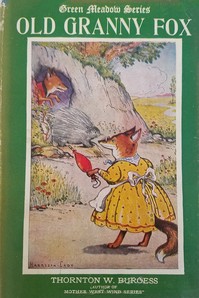
Old Granny Fox — Edition Insights
Fantasy Juvenile Worlds
27,001 recorded words. 4 minutes difference from this book's estimate.
View Gutenberg source #4980
The Shaving of Shagpat; an Arabian entertainment — Volume 4 — A Reader’s Guide can be approached with a clearer sense of reading commitment from its source measurements: 27,917 words, 2 hr 2 min estimated reading time, and 3 detected text sections.
The text analysis averages about 27.7 words per sentence, while the detected sections provide another way to judge how the source is divided.
Project Gutenberg metadata also associates the work with “Fantasy fiction, English,” connecting these edition facts with the source record’s subject description.
Explore this collection
These alternatives are selected using recorded categories and estimated reading time.
About 118 minutes
Fantasy Juvenile Worlds
27,001 recorded words. 4 minutes difference from this book's estimate.
View Gutenberg source #4980About 127 minutes
Fantasy Juvenile Worlds
29,026 recorded words. 5 minutes difference from this book's estimate.
View Gutenberg source #5365About 115 minutes
Fantasy Juvenile Worlds
26,424 recorded words. 7 minutes difference from this book's estimate.
View Gutenberg source #5440Search stored excerpts and compare books → Choose by your preferences →
Choices use stored catalog measurements. Estimates vary with reading speed. A shared category is a catalog label, not a claim that two books have the same argument or literary quality.
Search reads excerpt text stored with this catalog and links to its associated Gutenberg record. The connection is stored in the site database; this tool does not recheck that every excerpt is word-for-word identical to that external record. Excerpt search does not cover every chapter and does not verify historical publication dates.
Catalog snapshot checked: 2026-09-25. Coverage: 94 public books, 94 available source excerpts.
Calculated from edition completeness, EPUB availability, text structure and catalogue metadata. Not a user rating.
Total of 100 points, scaled to a 2.5-5.0 range. Editions with an empty description or a missing EPUB file are not scored.
Public-domain source text
The source text is kept in the dedicated reader, separate from this catalogue record and its commentary.
The fourth volume of The Shaving of Shagpat opens with Shibli Bagarag and companions escaping the Cave of Chrysolites, guided only by the Sword's light. They pass glimmering shapes and black pools, then stir a fountain that transforms into a bird, carrying them upward past winding terraces to the copper sun of Aklis. Shibli peers through a glass eye and sees Noorna, his betrothed, pale on a pillar, with the monstrous fish Karaz circling below. This sequence immediately establishes the volume's pattern: swift, surreal transitions between underground marvels and perilous vistas, with the Sword as both tool and talisman.
The opening passage from “Koorookh” immerses the reader in a subterranean realm of “silent and statue-like” shapes, “broad halls, halls of council,” and “black pools and black groves.” These details evoke an ancient, hidden kingdom, but Meredith does not pause to explain them; instead, the narrative moves quickly to the fountain and the bird. The Sword’s light is the only illumination, and Shibli Bagarag’s actions—stirring the fountain, waving the blade—directly alter the environment: the sun “took a bright flame, and threw golden arrows everywhere.” This cause-and-effect magic, tied to a single object, gives the opening a fable-like clarity even as the imagery grows strange.
In “The Dish of Pomegranate Grain,” Noorna appears in a bath scene with Luloo, her tone shifting from tender to solemn. When Luloo asks the name of Noorna’s betrothed, Noorna replies “in a deep tone and a voice as of reverence, ‘Shagpat!’” The name silences Luloo, who “drank in her breath and was awed.” Noorna then dons coarse white raiment and goes to the palace, where she finds a crowd gathered for a deputation from Shiraz. Her warning of “danger to Shagpat in this deputation” sets off a chain of consultations: from a shoemaker to a garlic-seller, a drum-beater, a carrier, a confectioner, a builder, and a tax collector. This comic relay, with each deferring to another, contrasts sharply with the earlier magical ascent and underscores the story’s blend of high fantasy and social satire.
The crowd scene near the palace is rendered with a cumulative, almost bureaucratic humor. Each man Noorna addresses—Shafrac, Zeel, Bootlbac, Krooz el Krazawik, Dob, Azawool, Tcheik—passes the word along, “till perplexity triumphed and was a cloud over them.” The phrase “Danger to Shagpat” spreads “like bees,” yet no one acts. Then “a shrill voice rose from the midst, dominating other voice,” cutting through the indecision. This moment, though brief, suggests that the narrative’s energy often lies in the collective reaction of minor characters rather than in the heroes alone. The excerpt leaves the speaker unidentified, a typical Meredithian tease that rewards close attention to the unfolding plot.
Meredith’s style in this volume is marked by ornate similes and rhythmic catalogues. The bird “winged straight up as doth a blinded bee”; Noorna and Luloo are “like the lily and its bud on one stalk in a shower.” Such comparisons give the prose a deliberate, almost ceremonial quality. The dialogue, by contrast, is brisk and colloquial: “Wullahy!” and “By the beard of my fathers.” The structure of the excerpts—alternating between swift magical action and extended comic dialogue—suggests that the volume balances quest-driven momentum with digressive, character-filled interludes. Readers should attend to how these shifts in pace and register create a distinctive, playful tone that is neither purely epic nor purely farcical.
The excerpts from Volume 4 reveal a work that moves fluidly between underground wonders and street-level gossip, between the Sword’s transformative power and the inertia of a crowd. Meredith’s prose rewards readers who enjoy elaborate description and ironic social observation. As you read, note how the recurring motif of the “Event” (often capitalized) frames the action, and how minor characters like the shoemaker or garlic-seller serve as both comic relief and narrative gears. The volume’s title, “an Arabian entertainment,” is an apt guide: expect spectacle, wit, and a plot that twists through many hands.
I’ve spent years watching how some stories settle beside each other on the shelf, not by subject, but by the way they carry their pageantry. Meredith’s ornate chain consultations and underground kingdoms—there’s a shimmer to them, a deliberate finery. That same careful ornament marks Uarda : a Romance of Ancient Egypt — Volume 02 — Edition Insights, a quiet neighbor for those long afternoons when grandeur feels gentle.
Your answers remain private and are stored only in this browser.