About 115 minutes
Uarda : a Romance of Ancient Egypt — Volume 02 — Edition Insights
Fantasy Juvenile Worlds
26,424 recorded words. 3 minutes difference from this book's estimate.
View Gutenberg source #5440
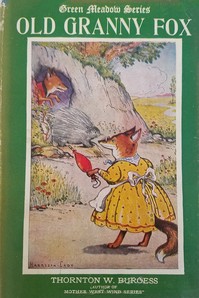
Old Granny Fox — Edition Insights can be approached with a clearer sense of reading commitment from its source measurements: 27,001 words, 1 hr 58 min estimated reading time, and 30 detected text sections.
The text analysis averages about 15.9 words per sentence, while the detected sections provide another way to judge how the source is divided.
Project Gutenberg metadata also associates the work with “Animals -- Juvenile fiction,” connecting these edition facts with the source record’s subject description.
Explore this collection
These alternatives are selected using recorded categories and estimated reading time.
About 115 minutes
Fantasy Juvenile Worlds
26,424 recorded words. 3 minutes difference from this book's estimate.
View Gutenberg source #5440About 122 minutes
Fantasy Juvenile Worlds
27,917 recorded words. 4 minutes difference from this book's estimate.
View Gutenberg source #4404About 114 minutes
Fantasy Juvenile Worlds
26,092 recorded words. 4 minutes difference from this book's estimate.
View Gutenberg source #4979Search stored excerpts and compare books → Choose by your preferences →
Choices use stored catalog measurements. Estimates vary with reading speed. A shared category is a catalog label, not a claim that two books have the same argument or literary quality.
Search reads excerpt text stored with this catalog and links to its associated Gutenberg record. The connection is stored in the site database; this tool does not recheck that every excerpt is word-for-word identical to that external record. Excerpt search does not cover every chapter and does not verify historical publication dates.
Catalog snapshot checked: 2026-09-25. Coverage: 94 public books, 94 available source excerpts.
Calculated from edition completeness, EPUB availability, text structure and catalogue metadata. Not a user rating.
Total of 100 points, scaled to a 2.5-5.0 range. Editions with an empty description or a missing EPUB file are not scored.
Public-domain source text
The source text is kept in the dedicated reader, separate from this catalogue record and its commentary.
From the first chapter, Burgess establishes a rhythm of scarcity. The snowbound Green Meadows and ice-locked Smiling Pool frame a world where every waking minute is spent hunting. The narrative voice shifts between Granny's clipped, practical warnings and Reddy's brash retorts, creating a dialogue-driven tension that mirrors their physical hunger. The opening couplet—'Pray who is there who would refuse / To bearer be of happy news?'—sets an ironic tone, as the news Reddy brings is not of a feast but of a risky plan.
The excerpts repeatedly underscore hunger as the primary motivator. Burgess describes the foxes as 'hungry most of the time' and notes that 'for several days they had had very little indeed to eat.' This scarcity drives every decision, from the failed henhouse attempts to the audacious scheme to steal Bowser the Hound's dinner. The physical sensation is rendered through Reddy's complaint that 'little bit of fish we divided is shaking around as if it were lost.' The pacing quickens when food is mentioned; Granny's long, reasoned speeches contrast with Reddy's impatient interruptions, such as 'I wish I was at them right now.' The narrative slows during planning and accelerates during action, mirroring the foxes' own fluctuating energy levels.
Granny Fox speaks in proverbs and measured warnings: 'I never yet saw a young Fox who didn't think he knew all there is to know.' Her voice is authoritative, seasoned by experience, and she frequently corrects Reddy's overconfidence. Reddy, by contrast, uses exclamations ('Pooh!', 'Gracious, I could eat a million fish!') and impulsive questions. Their dialogue reveals a clear power dynamic: Granny plans, Reddy executes. When Granny whispers the plan to steal Bowser's dinner, Reddy's response—'Granny, you are a wonder!'—shows his reliance on her cunning. Burgess uses these vocal contrasts to build character without explicit description, letting the reader infer age and temperament from speech patterns alone.
The excerpts demonstrate Burgess's technique of using dialogue to control narrative pace. In Chapter XVII, Granny's long explanation of why stealing Bowser's dinner is safer than targeting hens slows the action, allowing the reader to absorb the plan's logic. Reddy's short, eager replies ('Just as you say, Granny; just as you say.') maintain forward momentum. The whispered exchange creates a pause, then a sudden release when Reddy laughs. This rhythm—tension, explanation, resolution—recurs throughout the chapters. Burgess also varies paragraph length: short, punchy lines for urgency ('It is very simple,' replied Granny) and longer, winding sentences for deliberation. The result is a narrative that breathes with the characters' own hunger and caution.
Readers attentive to Burgess's craft will notice how the foxes' physical world—snow, ice, locked gates—mirrors their internal states of need and cunning. The dialogue does not merely advance plot; it reveals character through cadence and word choice. As the story unfolds, watch for shifts in who speaks first, who interrupts, and who falls silent. These patterns, more than any description, trace the evolving partnership between Granny's wisdom and Reddy's restless energy.
That rainy afternoon, I kept returning to the way Granny Fox’s quiet patience outlasted Reddy’s frantic hunger—how survival sometimes means waiting. The thought lingered, and I found myself drifting to another world’s measured calm: Uarda : a Romance of Ancient Egypt — Volume 02 — Edition Insights, where old rituals and unhurried voices carry their own weight. One book simply led to the next.
Your answers remain private and are stored only in this browser.