About 389 minutes
Jan of the Windmill: A Story of the Plains — Reading Companion
Fantasy Juvenile Worlds
89,256 recorded words. 33 minutes difference from this book's estimate.
View Gutenberg source #5601
The catalog record for The Shaving of Shagpat; an Arabian entertainment — Complete — Reading Companion provides practical reading context through 96,934 words, 7 hr 2 min estimated reading time, and 12 detected text sections.
The text analysis averages about 25.6 words per sentence, while the detected sections provide another way to judge how the source is divided.
Project Gutenberg metadata also associates the work with “Fantasy fiction, English,” connecting these edition facts with the source record’s subject description.
Explore this collection
These alternatives are selected using recorded categories and estimated reading time.
About 389 minutes
Fantasy Juvenile Worlds
89,256 recorded words. 33 minutes difference from this book's estimate.
View Gutenberg source #5601About 482 minutes
Fantasy Juvenile Worlds
110,761 recorded words. 60 minutes difference from this book's estimate.
View Gutenberg source #5677About 510 minutes
Fantasy Juvenile Worlds
117,253 recorded words. 88 minutes difference from this book's estimate.
View Gutenberg source #6020Search stored excerpts and compare books → Choose by your preferences →
Choices use stored catalog measurements. Estimates vary with reading speed. A shared category is a catalog label, not a claim that two books have the same argument or literary quality.
Search reads excerpt text stored with this catalog and links to its associated Gutenberg record. The connection is stored in the site database; this tool does not recheck that every excerpt is word-for-word identical to that external record. Excerpt search does not cover every chapter and does not verify historical publication dates.
Catalog snapshot checked: 2026-09-25. Coverage: 94 public books, 94 available source excerpts.
Calculated from edition completeness, EPUB availability, text structure and catalogue metadata. Not a user rating.
Total of 100 points, scaled to a 2.5-5.0 range. Editions with an empty description or a missing EPUB file are not scored.
Public-domain source text
The source text is kept in the dedicated reader, separate from this catalogue record and its commentary.
George Meredith's The Shaving of Shagpat opens with a barber's nephew, Shibli Bagarag, hungry and destitute before the city of Shagpat. The narrative immediately establishes a pattern of movement: from the knoll of sand under a palm, the protagonist gazes at yellow domes, mosques, and marble palace fronts, then descends into the city. This vertical and horizontal motion—between elevated vantage and lowly street, between the familiar and the fantastic—structures the tale. The story itself is framed as an 'Arabian entertainment,' and its episodic chapters, such as 'The Thwackings' and 'The Betrothal,' suggest a serial, picaresque rhythm.
The table of contents lists twelve sections with titles like 'The Thwackings,' 'The Betrothal,' and 'The Well of Paravid,' indicating a journey broken into discrete adventures. The opening paragraph declares it 'ordained that Shibli Bagarag ... should shave Shagpat,' setting a quest that unfolds through a series of encounters. The narrator invokes a poet: 'Ripe with oft telling and old is the tale, / But 'tis of the sort that can never grow stale,' acknowledging the formulaic yet enduring nature of the story. Each section introduces new characters and settings—subterranean kingdoms, enchanted palaces, a sleeping king—without a single continuous plot thread. This structure mirrors traditional frame tales, where the hero moves from one marvel to the next, propelled by fate and his own curiosity.
Shaving is not merely a profession but a transformative act. The title itself centers on the shaving of Shagpat, and the narrative repeatedly returns to the barber's tools and their symbolic weight. In the opening, Shibli Bagarag laments his wandering, calling it 'the curse of the inquiring spirit,' and contrasts his current hunger with the comfort of his uncle's shop in Shiraz. Later, in the sea episode, Noorna bin Noorka speaks of 'the sword of Aklis' and 'the flashes of the blade,' linking the barber's craft to a more magical weapon. The act of shaving becomes a metaphor for revelation and change—stripping away illusion or power. Even the 'ball he followed' and the 'sleeping king he shaved' suggest that the blade is a key to unlocking hidden realms.
The narrative shifts abruptly from the dusty city to the 'subterranean kingdom' and the 'enchanted palace.' In the excerpt, Shibli Bagarag moves from a knoll of sand to a vision of domes and cypresses, then to a sea where he swims with Noorna and rides a pearly shell 'scudding over the waves.' The shell is described with 'flashing crimson, amethyst, and emerald,' and the sea is called 'the Sea of Aklis.' This transition is typical: the hero passes from a recognizable, if exotic, setting into a realm of pure fantasy. The movement is often vertical—descending into wells or rising from waters—or horizontal, crossing seas and deserts. The text emphasizes the liminal spaces: the knoll, the shore, the shell. Noorna's story within the story, 'The Story of Noorna bin Noorka,' further layers these worlds, as she recounts her own origins in the wilderness and adoption by horsemen.
Meredith employs a distinctive narrative voice that frequently breaks into verse or aphoristic commentary. The opening includes a couplet: 'Ripe with oft telling and old is the tale, / But 'tis of the sort that can never grow stale.' Later, the narrator inserts a longer poem: 'The curse of sorrow is comparison! / As the sun casteth shade, night showeth star, / We, measuring what we were by what we are, / Behold the depth to which we are undone.' These interjections serve as moral or philosophical glosses on the action, reminiscent of traditional Arabic and Persian storytelling. They also create a self-aware tone, acknowledging the tale's antiquity while asserting its freshness. The narrator addresses the reader directly, as in 'Know, that when I was a babe...' within Noorna's embedded story, further complicating the layers of narration.
Readers approaching The Shaving of Shagpat should attend to the interplay between the hero's physical journey and the embedded tales that expand the world. The narrative's episodic nature rewards attention to recurring motifs—shaving, transformation, and the threshold between worlds—rather than a linear plot. Meredith's use of verse and direct address invites a leisurely, immersive reading, akin to listening to a storyteller.
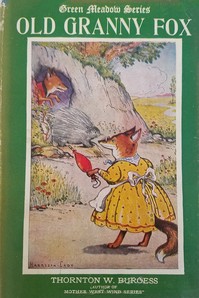
Reading the note on Shagpat’s shaving, I remembered how my father’s razor once scraped a clear path through my childhood morning fog. His steady hand, like Meredith’s narrator, moved between the mundane mirror and something brighter beyond. Old Granny Fox — Edition Insights brought that same quiet warmth back, a familiar comfort in its wildness, as if the forest knew my own small transformations.
Capture what you thought, learned, and would like to remember.