
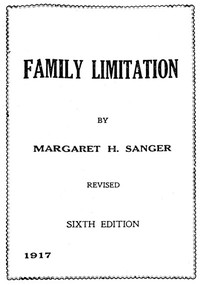
Family Limitation by Margaret Sanger
Let's clear something up first. 'Family Limitation' is not a storybook. Published in 1914, it's a short, instructional pamphlet. There are no characters or plot twists in the traditional sense. Its "story" is its existence and its mission.
The Story
Margaret Sanger, a nurse who had witnessed the suffering and death caused by unwanted pregnancies and botched illegal abortions, wrote this guide out of frustration and fury. The law said sharing this information was obscene. She did it anyway. The pamphlet plainly describes various birth control methods available at the time, from condoms to douches to pessaries. It gives practical advice, discusses failure rates, and argues passionately that women have the right to decide if and when to have children. Its publication was an act of defiance. Sanger was charged under the Comstock Laws, which banned sending "obscene" materials through the mail. She fled the country to avoid prosecution, while copies of her pamphlet were secretly passed from hand to hand among women who had no other source for this life-changing information.
Why You Should Read It
You read this not for literary style, but for historical gut-punch. It’s startling to see topics we discuss openly today laid out as forbidden knowledge. Some methods described are outdated or even alarming, which only highlights the dire lack of safe options. What gripped me was the tone—it's urgent, compassionate, and radically trusting of women's intelligence. Sanger speaks directly to the reader as someone who deserves autonomy. Holding this text, you're holding the tangible spark of the birth control movement. It makes the fight for reproductive rights feel immediate and personal, not like a distant chapter in a history book. It reminds you that rights we might take for granted were won through tremendous personal risk.
Final Verdict
This is essential reading for anyone interested in women's history, social justice, or the history of medicine. It's perfect for readers who want to understand the roots of modern debates by going straight to the source. It's short, potent, and incredibly impactful. Be prepared: it's not a comfortable read, but it's an important one. It will challenge you and stay with you long after you've finished the last page.
Legal analysis indicates this work is in the public domain. You are welcome to share this with anyone.
Christopher Moore
1 year agoThis is now a staple reference in my professional collection.
Kimberly Martinez
6 months agoThe clarity of the introduction set high expectations, and it addresses the common misconceptions in a very professional manner. I am looking forward to the author's next publication.
Richard Davis
1 year agoThis digital copy caught my eye due to its reputation, the footnotes provide extra depth for those who want to dig deeper. A perfect balance of theory and practical advice.
Linda Wilson
1 year agoIf you're tired of surface-level information, the author clearly has a deep mastery of the subject matter. An excellent example of how quality digital books should be formatted.





Emily Miller
8 months agoI was skeptical about the depth of this book at first, but the attention to detail regarding the core terminology is flawless. I'll be citing this in my upcoming project.